Goofy Things Dogs Do That Make Perfect Sense to Them
Published in Cats & Dogs News
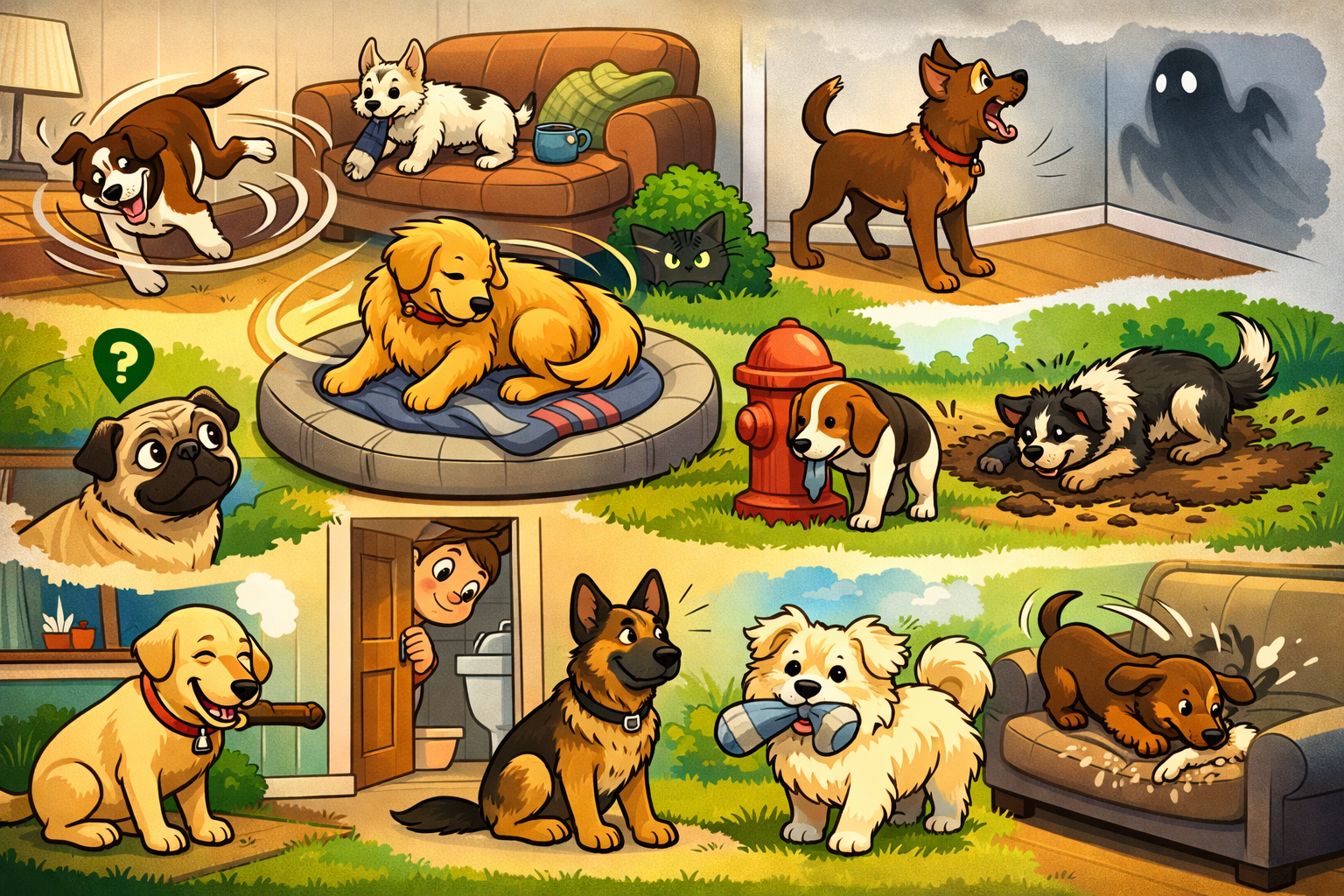
Dogs have a gift for turning ordinary life into low-grade performance art. One moment they are dignified companions; the next, they are spinning in circles, barking at invisible enemies, or carefully rearranging a blanket that was already fine. To humans, these behaviors can seem baffling. To dogs, they are entirely logical responses to a world filtered through scent, instinct, and emotion.
Understanding why dogs do “goofy” things is less about correcting them and more about appreciating how differently they experience reality. What looks ridiculous from the couch often makes perfect sense from four inches off the floor.
The Sudden Zoomies
Few sights are more joyful — or confusing — than a dog suddenly erupting into high-speed chaos. One second they are lying quietly, the next they are sprinting through rooms, leaping over furniture, and skidding around corners as if chased by ghosts.
These “zoomies,” officially called Frenetic Random Activity Periods, are bursts of stored-up energy. Dogs experience them after baths, naps, meals, or moments of excitement. From their perspective, the body has excess energy and must discharge it immediately.
In the wild, sudden sprints helped animals stay agile and alert. In modern homes, that instinct translates into racing laps around the coffee table. It looks silly. It is actually emotional and physical maintenance.
Spinning Before Lying Down
Many dogs turn in tight circles before settling into bed. Sometimes they do it once. Sometimes five times. Occasionally they seem determined to rotate themselves into another dimension.
This behavior comes from ancient survival habits. Wild dogs and wolves would circle to flatten grass, check for snakes, and position themselves against the wind. The ritual ensured safety and comfort.
Your dog is not checking for predators in your living room. But the instinct remains. Spinning says, “This spot is now officially mine and properly prepared.”
Sniffing Everything Like a Detective
A walk with a dog is rarely about exercise. It is about information gathering. Every lamppost, bush, and blade of grass contains stories written in scent.
Dogs process smell with a brain region far more powerful than ours. What seems like “standing around sniffing nothing” is actually reading the neighborhood newspaper, social media feed, and crime report all at once.
When a dog refuses to move because they are absorbed in sniffing, they are not being stubborn. They are busy.
Barking at Nothing (That You Can See)
Dogs often bark at empty corners, quiet yards, or closed doors. Humans scan the area and find nothing. Dogs persist.
Their senses are sharper. They hear distant footsteps, electrical hums, animals in walls, or cars blocks away. Sometimes they react to smells left hours earlier.
Occasionally, they bark at things that truly are not there anymore — lingering sensory echoes, like emotional afterimages. To them, it is still real enough to warrant an alert.
From the dog’s point of view, not barking would be irresponsible.
Rolling in Questionable Substances
Given the chance, many dogs will enthusiastically roll in mud, dead leaves, garbage, or worse. Owners recoil. Dogs celebrate.
This behavior likely evolved from scent camouflage. Wild animals masked their own smell with environmental odors to avoid predators and sneak up on prey.
Your dog is not planning an ambush. But their brain still says, “This scent is valuable. Apply it generously.”
To a dog, smelling like yesterday’s trash is not embarrassing. It is strategic.
Staring at You While You Use the Bathroom
Few things unsettle people more than intense eye contact from a dog during private moments. It feels intrusive. It is actually affectionate.
Dogs are social animals who rely on group safety. In the wild, vulnerable moments require protection. When you sit down, your dog thinks, “Ah. Guard duty.”
They are not being nosy. They are watching your back.
Carrying Socks Like Priceless Artifacts
Many dogs steal socks, shoes, and clothing and parade them proudly. Sometimes they hide them. Sometimes they present them.
Clothing smells strongly of their favorite person. To a dog, that scent equals comfort, belonging, and security. Carrying it is emotionally soothing.
It is less theft and more emotional souvenir collecting.
Tilting Their Head at Your Voice
When dogs tilt their heads, humans melt. The gesture looks thoughtful, even philosophical.
It is practical. Tilting helps dogs adjust their ears to locate sounds more precisely. It also improves their view of your face, especially if their muzzle blocks part of their vision.
They are not being cute on purpose. They are optimizing data intake.
The cuteness is a side effect.
Digging on Beds and Couches
Before lying down, many dogs scratch, dig, and punch pillows as if preparing for battle.
Again, this comes from nesting behavior. Wild dogs dig shallow depressions for warmth and protection. Modern dogs do the same on memory foam.
They are engineering comfort.
Bringing You “Gifts” You Did Not Request
Sticks, toys, socks, leaves, and occasionally unidentifiable objects are deposited at human feet with great ceremony.
This reflects pack-sharing instincts. Dogs offer valued items to strengthen bonds. Sometimes it is a favorite toy. Sometimes it is trash. The intention is sincere.
They are saying, “I like you. Have my treasure.”
Why All This Matters
What unites these behaviors is not randomness. It is continuity. Dogs live in a sensory world shaped by millions of years of evolution. Their instincts remain active even in climate-controlled homes with orthopedic beds.
When dogs act “goofy,” they are not malfunctioning. They are being dogs.
Understanding this reframes annoyance into empathy. The zoomies are not chaos. They are joy. The sniffing is not stalling. It is exploration. The sock theft is not rebellion. It is love with poor judgment.
Living with dogs means sharing space with another way of perceiving reality — one driven by scent, loyalty, movement, and ancient patterns that refuse to retire.
And that, ultimately, is part of the magic.
========
Maribel Trentwood is a freelance lifestyle and science writer who covers human-animal relationships, behavior research, and everyday psychology. She lives in Oregon with two rescue dogs and a perpetually stolen laundry basket. This article was written, in part, utilizing AI tools.






Comments