Steve Lopez: The doctor who helped save her is in another state, and telemedicine follow-up is prohibited
Published in Op Eds
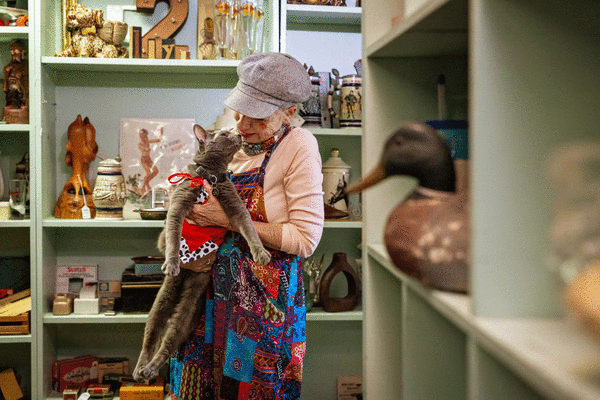
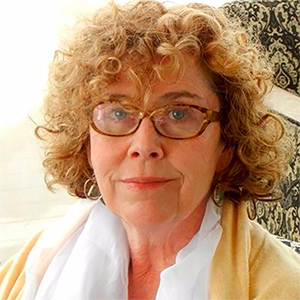
LOS ANGELES — In her fight against an aggressive form of cancer, Santa Clarita Valley resident Robin Clough is winning, for now.
But in her fight for the right to have telemedicine followups with the out-of-state doctor who helped save her life, she is losing. And legislation that would have eased the way for her and other California patients who are in remission to get continued care across state lines just died in Sacramento.
Clough and her husband, Dr. Gene Dorio, a house-call geriatrician I've written about several times, were driving home from a medical appointment the other day when I reached them by phone. Clough, still doing well four years after a diagnosis of anaplastic thyroid cancer, said people can't believe it when she tells them about the prohibition on communications with her doctor in Texas.
"They're like, 'That's absurd,'" Clough said.
And the problem isn't limited to California, which is one of about 30 states with tight restrictions on interstate telemedicine.
"There are tens if not hundreds of thousands of cases," said Dr. Helen Hughes, a Johns Hopkins pediatrician and leading advocate for reforms that would remove barriers between patients and the care they need.
Hughes said that during the COVID-19 pandemic, telemedicine flourished by necessity. That included cases in which a patient in one state was being treated by a doctor in another state. But there's been a gradual return to prohibiting doctors from providing care to patients in states where they are not licensed to practice.
Patients with cancer and various chronic diseases are affected. But so are students who attend college out of state and can't check in with their doctors back home. And someone who participates in a clinical trial could run into interstate restrictions.
These conflicts will become more common, said Hughes, as medical technology evolves, with scattered locations providing specialty care for chronic, critical and rare conditions. There won't be "experts on everything in every state," said Hughes, so patients who are able will seek out the latest breakthroughs and best care.
Dr. Shannon MacDonald, a radiation oncologist and former Harvard professor who treats rare pediatric malignancies, sees patients from across the country.
"I treat them with a type of radiation that's not available in every state," she told me.
In the past, MacDonald said, she continued to care for those patients, sometimes meeting with parents by video conference to review scans taken in their home state. That saved the families the time and money needed to travel back to Massachusetts with a sick child.
But hospital administrators have been pulling the plug on those types of arrangements.
"Giving medical advice to an out-of-state patient over the phone can put me at risk of losing my license, and, in states such as California and New Jersey, of criminal charges as well," MacDonald wrote in a guest opinion piece for the Wall Street Journal.
This is the very problem Robin Clough has run into. She was diagnosed in 2022 with anaplastic thyroid cancer and underwent chemotherapy and radiation, but the cancer persisted. Her doctor at Cedars-Sinai knew an oncologist at the MD Anderson Cancer Center in Houston, a leader in treating anaplastic cancer. Clough traveled there for targeted immunotherapy treatment, and about a month later, the cancer was in check.
"I was supposed to be gone, but I'm not," Clough told me two years ago in the kitchen of her home. "So every day is 'Wow,' you know? I get to see my daughters, and in the process of this I had my first grandchild."
Clough had several telemedicine followups with her Houston doctor, which was legal under California law that allows interstate telemedicine for patients with life-threatening conditions. But the law does not apply to patients in remission, and so Clough is forced to travel to Texas for continued care.
Clough and Dorio are members of California's advisory senior legislature, and they proposed a bill to allow patients in remission to continue interstate care. It led to S.B. 1002, introduced in February by Sen. Roger Niello (R-Sacramento).
"Some of us are in remission or with no evidence of disease," Clough testified at a hearing on the bill. "That does not mean we are cured. We are still in jeopardy of recurrence and require careful continuity of care monitoring by our out-of-state specialist."
But at that same hearing, representatives of the Medical Board of California and the California Medical Assn. pushed back. They argued that out-of-state doctors are not licensed to practice in California and might be unfamiliar with state laws and standards of care, putting patients at risk and making oversight and disciplinary action difficult.
The bill passed in the Senate but failed in the Assembly, with support from only one Democrat. Assemblyman Marc Berman (D-Menlo Park), who heads the committee where the bill died, voted against the remission amendment and said there are "multiple ways out-of-state doctors can continue to provide care to state residents."
A doctor can get a license in California, the patient can travel to where the doctor is licensed, or the doctor can consult with the patient's in-state doctor. Otherwise, Berman said, if an out-of-state doctor commits "malpractice or negligence, there's no recourse for the California patient."
Berman told me he's sympathetic to the plight of Clough and others, and he's open to further discussion. But under current law, he said, an out-of-state doctor can have a video conference with a patient and that patient's in-state doctor, and he supports that practice.
When I put that to MacDonald, she said, "I'm in clinic today, and I have 35 patients." Imagine the complication, she said, of coordinating a video conference with an equally busy doctor in another state. As for getting licensed in other states, MacDonald said it would involve hours of paper work and cost about $90,000 to get a license in every state, with periodic renewals required.
Niello told me he got involved when he heard about Clough's case. He said her Houston treatment center is a premier facility, and "for California to opine that it's not good enough for us" is a strange concept. He said he thinks it's "actually kind of cruel" to restrict communication between a patient and "the doctor who … guides" that patient to a "renewed life."
The senator said that if he is re-elected in the fall, he'll reintroduce the bill. Meanwhile, advocates are pursuing lawsuits on behalf of patients whose access to interstate care is restricted. And Johns Hopkins has launched a three-year program to research remedies, including waivers in the case of long-established doctor-patient relationships.
Dorio said there are thousands of cancer mutations for which there are thousands of therapies, and in the modern world of medical advances and telehealth capability, no one is served by restricting access to care. He and Clough have twice traveled to Houston for followups that could have been done by video conference, but not everyone can afford to do the same, he said.
Dorio and Clough are about to take their third trip to Texas, and his California driver's license, he noted, is good in every state. So why do physicians, who all must meet uniform national standards of education and training to become doctors, have to get a license in every state?
"We're going to look back one day," Dorio said, "and see how ridiculous this is."
©2026 Los Angeles Times. Visit at latimes.com. Distributed by Tribune Content Agency, LLC.


Comments