Accessorizing Without Breaking the Bank
Published in Fashion Daily News
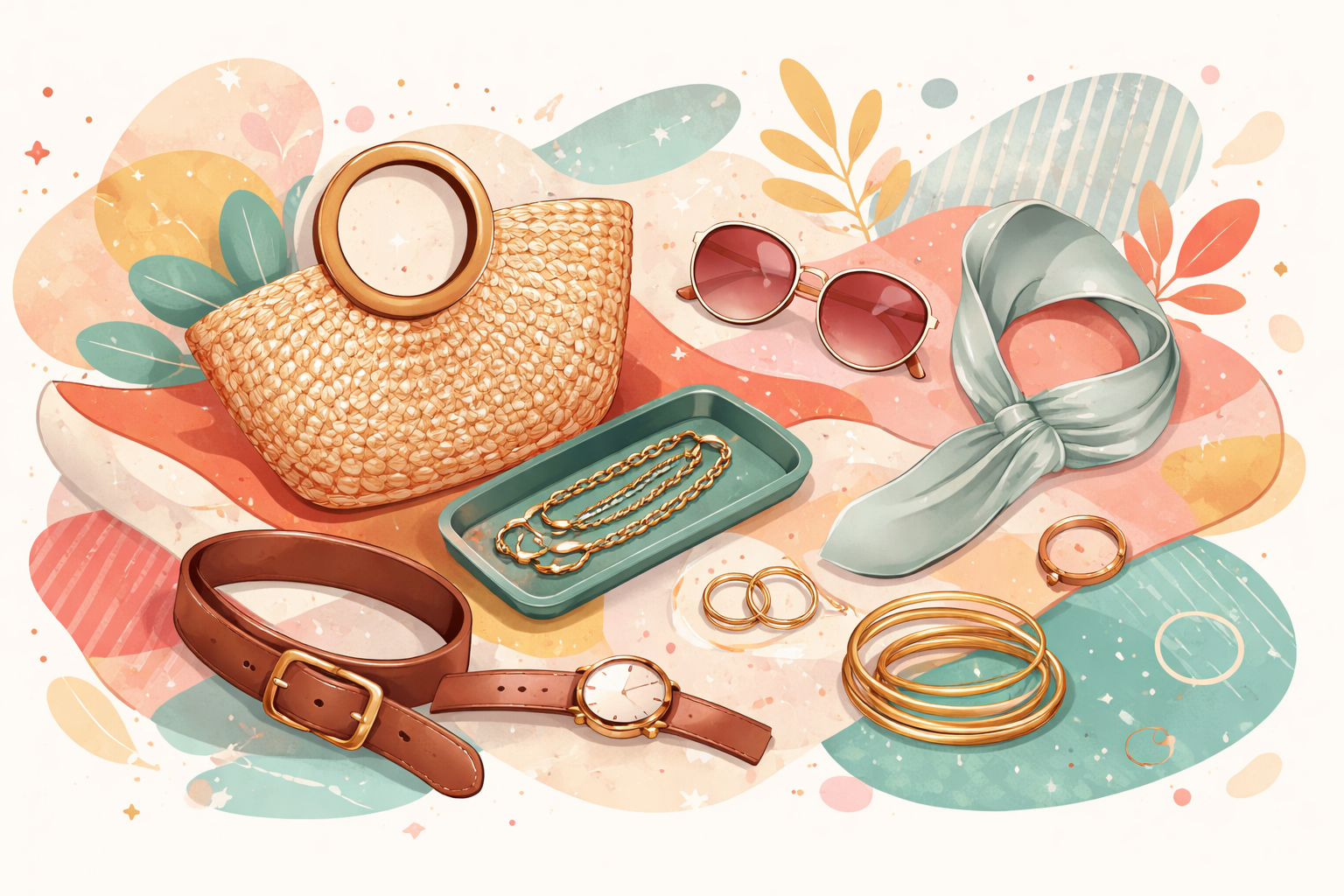
Accessorizing has long been one of fashion’s most powerful tools. A simple necklace, a distinctive watch, or a carefully chosen scarf can transform an ordinary outfit into something memorable. Yet in an era of luxury branding and influencer culture, accessories are often framed as expensive status symbols rather than creative tools. For budget-conscious consumers, the challenge is learning how to build personal style without overspending. The good news is that effective accessorizing depends more on strategy and imagination than on price tags.
Understanding the Role of Accessories in Personal Style
Accessories function as visual punctuation. They emphasize, redirect, or soften an outfit’s message. A bold belt can introduce structure. Layered bracelets can signal informality. A minimalist pendant can project restraint. Fashion scholars often describe accessories as “semiotic markers,” objects that communicate identity, taste, and social belonging.
Because accessories carry symbolic weight, their impact is often disproportionate to their cost. A well-chosen $15 scarf can appear more intentional than a mismatched $300 handbag. Successful styling begins with understanding what message one wants to convey and selecting pieces that support it, rather than pursuing brand recognition.
Building a Versatile Foundation Collection
Budget accessorizing starts with versatility. A small collection of adaptable pieces can serve dozens of outfits across seasons. Neutral-toned belts, simple stud earrings, a classic wristwatch, and a lightweight scarf form the backbone of many wardrobes.
These foundational items should prioritize durability over trendiness. Materials such as stainless steel, faux leather with reinforced stitching, and high-quality resin often outperform cheaper alternatives in longevity. Spending modestly more on these core pieces can reduce long-term replacement costs.
Experts recommend thinking in terms of “outfit multiplication.” If one accessory works with at least five outfits, it justifies its place in a budget-conscious collection.
Thrifting, Vintage Shopping, and Secondhand Markets
Secondhand markets are among the most effective tools for affordable accessorizing. Thrift stores, consignment shops, estate sales, and online resale platforms regularly offer high-quality pieces at steep discounts.
Vintage accessories often provide superior craftsmanship compared to mass-produced modern items. Metal clasps, stitched leather, and natural materials were more common in earlier decades. A vintage brooch or handbag can function as both a fashion statement and a conversation piece.
Successful thrifting requires patience and pattern recognition. Regular visits increase familiarity with store layouts and pricing norms. Shoppers who learn when new inventory arrives gain significant advantages.
Leveraging Fast Fashion Strategically
Fast fashion retailers supply inexpensive accessories at high volume. While critics rightly point to environmental and labor concerns, these outlets remain influential in contemporary style ecosystems.
Strategic use is key. Trend-driven items—oversized sunglasses, seasonal color palettes, novelty earrings—are often best sourced cheaply, since their relevance may fade quickly. Investing heavily in short-lived trends rarely pays off.
Consumers can minimize waste by favoring modular designs that can be repurposed or combined. Scarves, pins, and layered necklaces often outlast more rigid statement pieces.
DIY Customization and Creative Repurposing
Do-it-yourself modification remains an underutilized strategy. Simple tools and inexpensive supplies can transform basic accessories into personalized items.
Replacing buttons on a handbag strap, repainting costume jewelry, adding patches to caps, or restringing beads are low-cost interventions with high stylistic returns. Online tutorials and community workshops make these skills accessible.
Repurposing also plays a role. A silk scarf can become a belt. A long necklace can be doubled into a choker. Brooches can function as bag charms. These adaptations extend the functional lifespan of existing items.
Seasonal Rotation and Storage Discipline
One reason accessories feel redundant is poor organization. Items that are forgotten in drawers are often repurchased unnecessarily. Seasonal rotation—bringing relevant pieces forward while storing others—maintains visibility and reduces wasteful spending.
Clear containers, peg boards, and hanging organizers improve accessibility. Digital photo catalogs can also help users remember what they already own. Awareness is an underrated budgeting tool.
Evaluating Quality Without Brand Bias
Brand labels are unreliable indicators of durability. Instead, consumers should assess construction details: secure clasps, reinforced seams, smooth finishes, and balanced weight distribution.
For jewelry, hypoallergenic metals and sealed coatings prevent premature wear. For bags, reinforced corners and lined interiors predict longevity. For belts, evenly punched holes and consistent stitching matter more than logos.
Learning to evaluate craftsmanship empowers shoppers to identify undervalued items and avoid overpriced ones.
Social Media, Trends, and Financial Awareness
Digital platforms accelerate trend cycles, encouraging rapid consumption. Algorithms reward novelty, not longevity. This dynamic pressures users to constantly update their appearance.
Resisting this cycle requires intentionality. Curating inspiration boards based on personal taste rather than viral content fosters consistency. Following creators who emphasize reuse, capsule wardrobes, and ethical sourcing also shifts consumption norms.
Financial literacy and style literacy intersect here. Understanding opportunity cost—what else could be purchased with the same money—helps contextualize accessory spending.
Conclusion: Style as a Skill, Not a Purchase
Accessorizing well is a learned practice. It involves observation, experimentation, and reflection. Over time, individuals develop aesthetic instincts that guide efficient decision-making.
When style is framed as a skill rather than a commodity, financial pressure diminishes. The goal becomes expression, not accumulation. In that framework, affordability is not a limitation but an incentive to think creatively.
With thoughtful selection, strategic shopping, and basic maintenance, accessories can enhance personal style without undermining financial stability.
========
Maribel Ortega is a freelance culture and lifestyle writer specializing in consumer trends and visual identity. Her work explores the intersection of aesthetics, economics, and everyday decision-making. This article was written, in part, utilizing AI tools.




Comments